

The CSA Incubator programme 2 years on…
Date Published: 31st March 2026
Following on from two successful schemes that ended in 2023, in Spring 2024 CSA Network launched a new programme to provide support to CSAs in the process of getting off the ground, and work towards the Network’s vision of ‘a thriving CSA in every UK neighbourhood’. It was aimed at CSAs who were ready to start and for whom additional support might be the make or break between success and failure.
Thanks to Frank Parkinson Agricultural Trust we had funding for six places on the programme but with so many exciting new CSAs starting up it was clear more was needed. With help from Pebble Trust and a private donor we managed to expand the programme to take on ten CSAs!
The programme runs for two years and offers bespoke support to suit the needs of each CSA. The CSAs selected are all primarily horticultural, although they represent a diversity of models and locations.
Participants communicate regularly and offer/receive peer to peer support via a Whatsapp group specifically for the programme, and we are pleased to note that some are now in direct communication and supporting each other beyond the structure of the programme.
Through group meetings with expert speakers on topics that the group have asked to know more about, to CSA masterclasses covering topics from business planning and finance to marketing your CSA, business planning and finance advice to bespoke one to one mentoring, each CSA has used this Incubator Scheme to develop in some way over the last 2 years.
The mentoring and training aspect of the programme is bespoke and different to meet the individual needs of each CSA, who are at different stages in their journeys. Each of them have learnings and ideas that they are looking to implement this season, and most have a site visit, mentoring session or training course arranged for the next month or two.
We are looking at arranging a final group meeting online to share learnings and celebrate the progress they’ve made in establishing their CSAs, and deepen connections before the programme ends.
Following that, we will be gathering feedback, capturing lessons, and evaluating the programme. This will be shared in a final report later this year.
Meet some of the Incubator CSAs below…

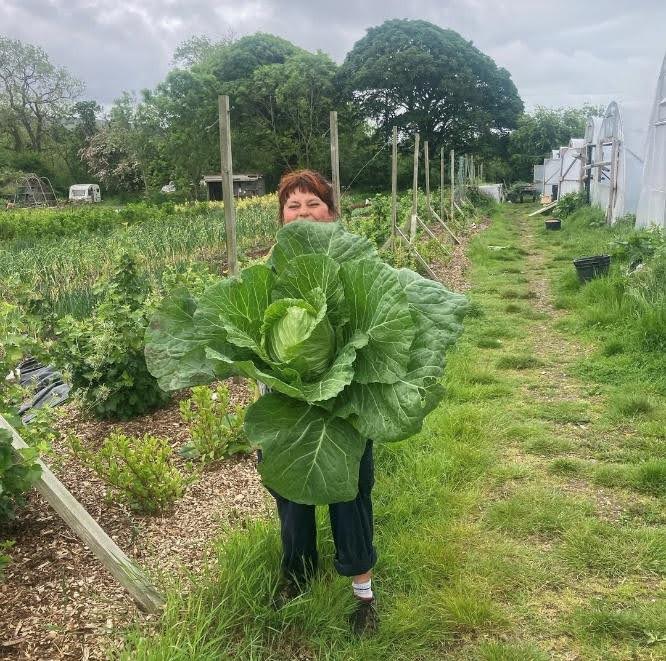
Amandla – Sustainable Kirriemuir, Angus
Sustainable Kirriemuir is an environmental charity based in Angus, with a vision for a sustainable net-zero community where people and nature flourish. In November 2024 they gained access to the 17 acre field on the Kinnordy Estate they intend to transform into a thriving ecosystem that will also provide vegetables, fruit, eggs, meat, honey and more for their community.
2025 was a year for getting equipment and infrastructure in place, such as deer-fencing, a polytunnel, utilities and a packaging shed. In particular, they have challenges with irrigation as they are reliant on harvesting rainwater at present. They start growing in earnest this season with an aim of 30 shares. They intend to start with a flat rate for their veg boxes this year and introduce a sliding scale pricing system for next season.
Amandla Taylor, who is pioneering the project, has engaged a good team of volunteers as well as a part-time staff member and comms support from the umbrella charity. She is being mentored on improving her irrigation system and looking to visit Tomnah’a CSA.
sustainablekirriemuir.co.uk
Facebook
Instagram
Spencer – Nourish Kernow CIC, Camelford, Cornwall
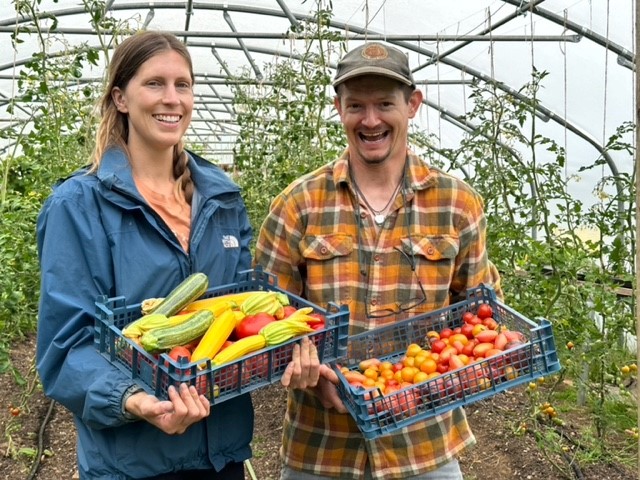
Nourish Kernow CIC is a growing community based in Camelford, North Cornwall on 15 acres, headed up by Spencer Rabey with the support of 3 directors. They have a small apple orchard and host events to bring in the local community, alongside their care farm work and campsite.
They were awarded funding for a grower in 2024, but when the funding ran out Spencer ran the CSA solo in 2025 whilst still managing to scale up significantly. He is about to employ a grower from the income from the 30-40 shares they will provide this season, freeing Spencer up to work on the management, community and educational activities, and undertake training with the Apricot Centre.
To support them with producing a consistent supply, Spencer has had mentoring on crop-planning. He has had a remote review of his business plan and finances with a mentor and a site visit to look at practical aspects of the business. He is receiving support on the programme with applying for funding for much-needed infrastructure.
Find Nourish Kernow on: website I Facebook I Instagram
Maddy Starzak, Food Works, Sheffield
As part of the local food action plan, and in partnership between Sheffield City Council and Food Works, Maddy is working to turn the old council glasshouses into a community growing space in order to make more local and nature-friendly grown food accessible across Sheffield city.
Maddy is receiving support from a grower well connected in the Sheffield food system as well as a mentor experienced in working with glasshouses. We are looking to connect her with a mentor who grows in a school context to support her in developing her educational offering and the unique challenges of growing around the school term, curriculum and legislation.
Find FoodWorks on: website
Jimmy and Olly, Lush Greens, Bristol
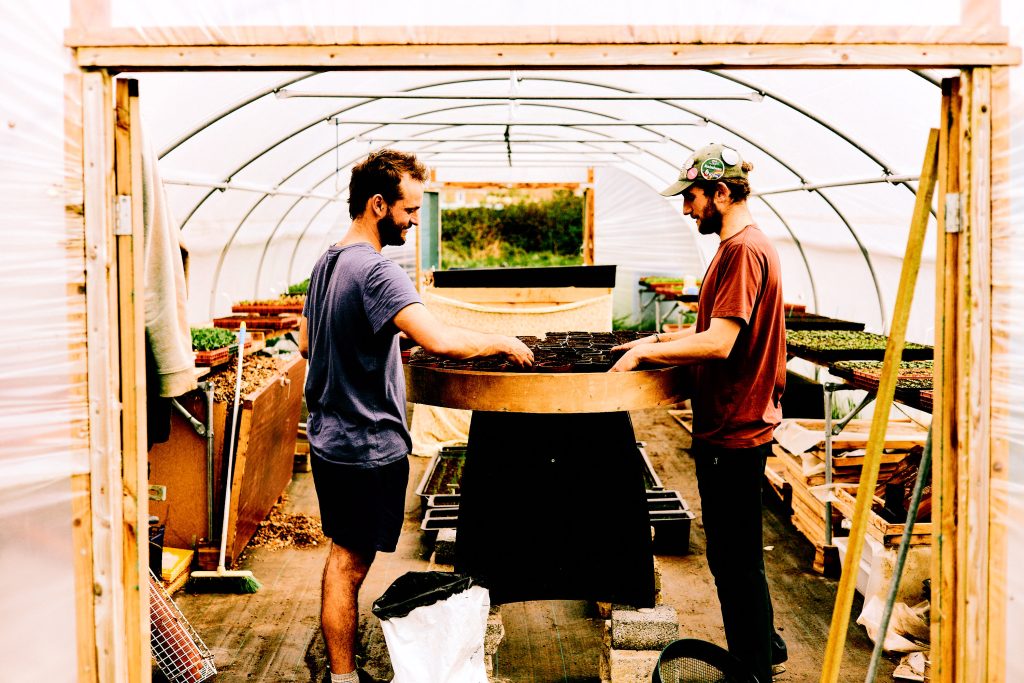
Jimmy and Olly of Lush Greens have now completed three seasons as a CSA on 1.3 acres on council land in urban Bristol. They offer shares on a pay-what-you-can-afford basis and have received funding to grow vegetables for food charities in the local community. This year they supplied between 13 and 24 veg shares and 13 funded social prescribing shares.
They have had some mentoring focussed specifically on options to meet their infrastructure needs, in particular, a polytunnel and irrigation system. Some business and finance mentoring boosted their confidence that they are heading in the right direction and highlighted some practical areas where efficiencies could be made. The programme has funded their visits and mentoring at 4 CSAs and market gardens, giving them insight into what is possible at their scale and different site designs and ways of communicating with customers. They have picked up many ideas to improve their crop selection and planning and hope to be able to extend their growing season and share offer by 2-4 weeks.
Find Lush Greens on: Instagram I Facebook I www.lushgreensbristol.org.uk
Wellington Community Food, Somerset
A Community Benefit Society, Wellington Community Food is based on council-owned land in Somerset. They are run by a board of 5 directors with two employed part-time growers.
Growing began in 2023 on half a hectare producing 17 crop shares, which expanded in 2024 to fill a hectare and supply 38 shares, and aim for 60 shares in 2026. There is access to mains water on site, but no electricity other than a back-up generator. They have recently run a crowdfunder to enable them to put more infrastructure in place. They have had 800 children visit over 23 school visits, which has been very successful.
As part of the programme they have had a site visit to receive advice on growing rotations and distribution, a review of their business plan and finances and have been supported to attend a grower training and networking event for market gardeners and allow their growers to attend Oxford Real Farming Conference as part of their professional development. They are now having further business planning support to look at their capacity and balancing labour costs for future years, and we hope to organise some mentoring to help them design their agroforestry project.
Find Wellington Community Food on: website I Facebook
Adrienne Gordon, Sweetpea Market Garden, Cambridgeshire
Sweetpea Market Garden started in 2021 selling wholesale and at farmers markets, and launched as a CSA in 2024, when Sweetpea also gained organic certification. She produces salads, microgreens, edible flowers, seasonal veg and fruit on 3 acres in Caxton, near Cambridge.
She is receiving mentoring on writing grant applications to improve the infrastructure on the site. One of the challenges is that it is off-grid, so Adrienne is exploring with a renewable energy company the possibility of generating power to run a cold-store. This year she will have access to a tractor that will improve efficiency, so the programme is funding her place on a tractor course as well as supporting her to attend two courses in running workshops, and monitoring biodiversity and demonstrating impact in a market garden context. We are in the process of arranging a mentor visiting her site to help her feel prepared for the season ahead.
Find out more about Sweetpea Market Garden: website I Facebook I Instagram

Kirsty, Grow Nairn, Highlands, Scotland
Grow Nairn is a community led organisation seeking to start a community market garden managed as a social enterprise, supplying fresh fruit and vegetables to the Nairn community in the Highlands of Scotland.
Grow Nairn formed in February 2025 following a feasibility study into the use of an area of Common Good land in Nairn. They are currently in discussions with the local authority into the leasing of the land, and conducting a public engagement in to how to best structure their plans to benefit the community as well as market research. They have had some business and finance mentoring reviewing their plans as well as their proposal to the council.
Find Grow Nairn on: website
Lower Nill Farm, Hook Norton, Oxfordshire
The Taylor family are third generation farmers in Hook Norton, Oxfordshire, journeying into regenerative farming and democratise food through selling nutrient-dense produce to their local community. They have a traditional orchard and have recently planted up 6 hectares for agroforestry. The site also hosts glamping visitors, a suckler beef herd and honey bees.
The farm already has plenty of barn space, chillers, loaders, compost and a supply of cow manure, and since the programme started they have installed a polytunnel and deer fencing. It has taken some time to find the right person, but they have now taken on Henry as a grower, who is hitting the ground running and preparing for his first season. He is starting with 20 shares this season, with the aim of increasing to between 50 and 100 shares. Henry has been delivering the farm’s egg round and is confident there is enough interest amongst those customers.
Henry trained at FarmEd and is confident in the business planning and theoretical aspects but was concerned he doesn’t have all of the practical experience he might need. He has three mentors visiting his site and following up remotely to feed back some suggestions and help ensure the CSA is getting off to a good start during the early stages.Find Lower Nill Farm on: website
David, Tyninghame Community Farm, Dunbar, East Lothian
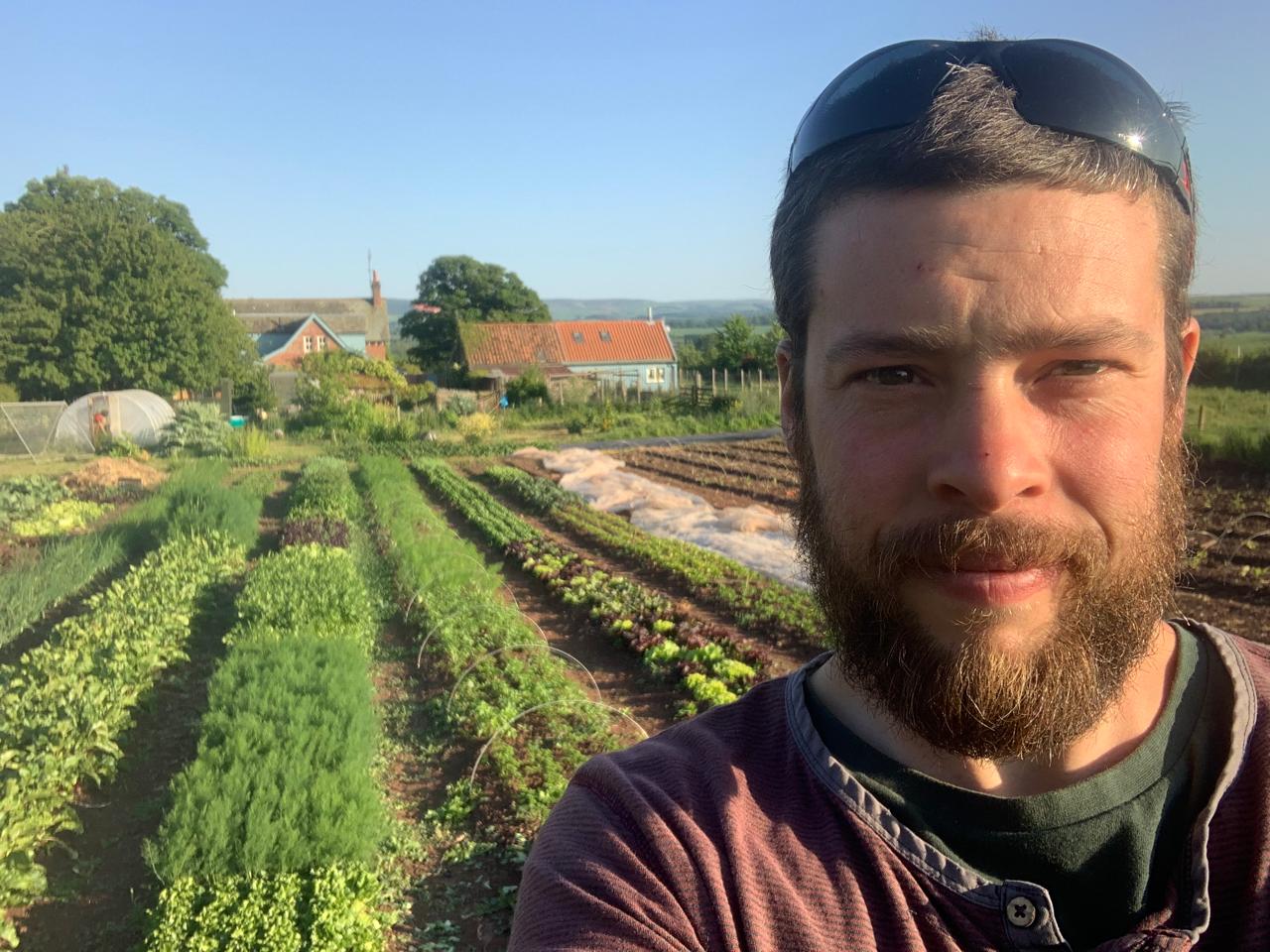
Tyninghame Community Farm CIC is a community-led CSA managed by Head Grower, David Barfoot, and supported by a team of 5 directors. Founded in 2023, they started by selling wholesale to a local community shop and launched their first 20 veg shares in 2024 and increased to 70 in 2025. David is working towards a target of 120 shares that he thinks will be needed to be financially sustainable in the long term.
David wanted to see established CSAs of the size and scale Tyninghame is aiming to be, as well as get some advice on crop-planning to extend the season and produce the consistent offering throughout that is needed for a CSA. As part of the programme he has visited East Neuk Market Garden where he learned how to save his own tomato seeds and do more intercropping, as well as expanding his over-wintering crops to enable shares to start earlier in the season. He has also had support with doing soil assessments on the farm and a financial viability analysis and help with review grant applications. One of the directors at Tyninghame is planning a visit to The Community Farm soon.
Find out more about Tyninghame Community Farm: Website Facebook
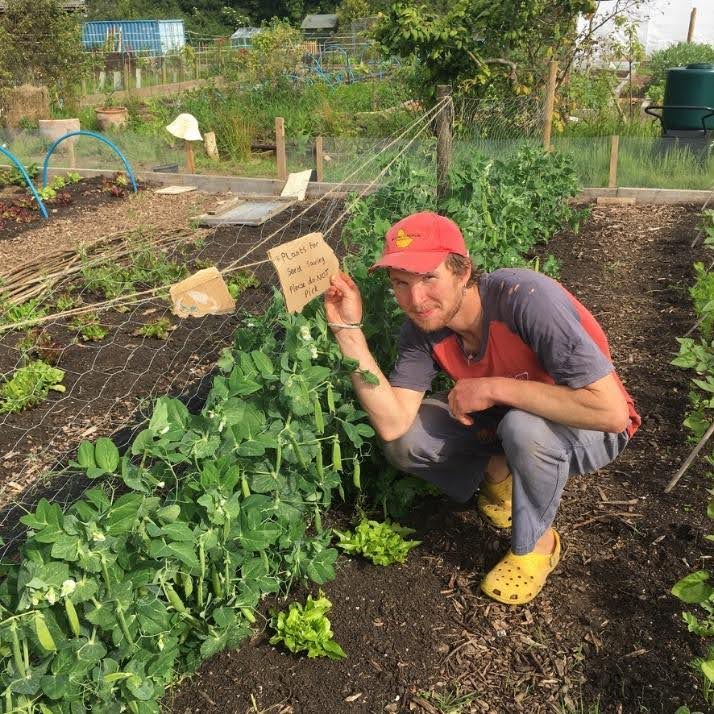
Barney Spooner, Wedmore Village Farm, Somerset
Wedmore Village Farm in Somerset started in 2024 with funding to grow food for local food banks and schools in need, distributing close to 800kg of veg from their 1/8 acre community garden. In 2025 they expanded to establish a 1/2 acre no-dig market garden supplying 27 members, whilst also continuing to supply fresh produce to several local food banks.
Barney Spooner grows all the produce for the CSA and has had some mentoring running a financial viability analysis on his business model. He is also receiving support from the Apricot Centre in developing an education programme on the farm.
Find Wedmore Village Farm on: website